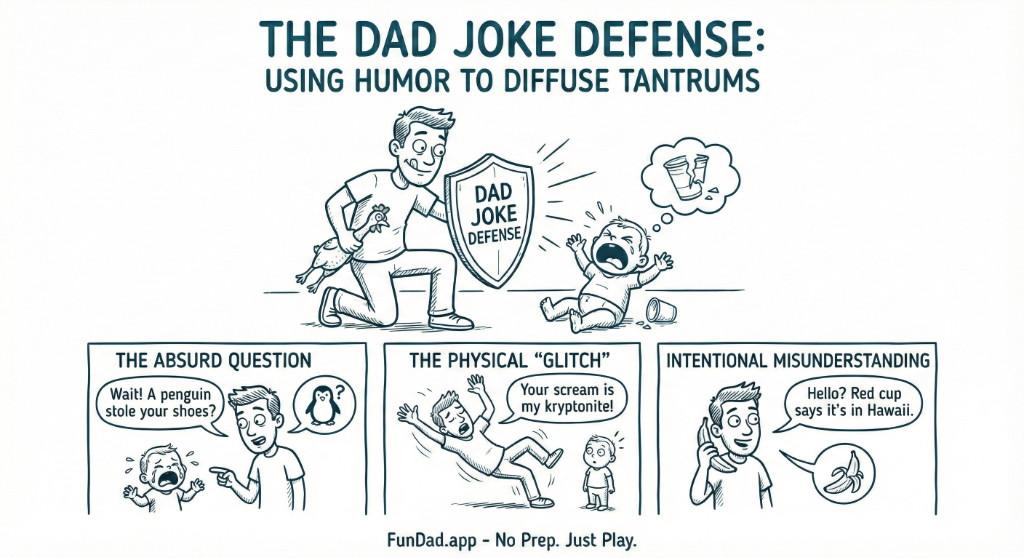
The scene: 5:45 PM. The kitchen floor. Your toddler is lying prone, kicking the cabinets because you had the audacity to serve them the blue cup instead of the red one.
Your blood pressure rises. You try logic: “But buddy, the blue cup holds juice just the same.” (Failure). You try firmness: “Stop kicking now.” (Volume increases).
Welcome to the tantrum trenches. When a child enters a full meltdown, their “thinking brain” has gone offline, and their primal “lizard brain” has taken the controls. You cannot reason with a lizard.
But you can surprise it.
This is where the FunDad Lifestyle shines. Instead of matching their chaos with anger, you deploy the ultimate weapon in your arsenal: Comedy in parenting.
It’s time to master the Dad Joke Defense.
Why Humor Works When Logic Fails
When a kid is spiraling, they are locked into a loop of big, negative emotions. Diffusing tantrums with humor isn’t about mocking their feelings; it’s about creating a “circuit breaker.”
A sudden, unexpected moment of silliness forces their brain to shift gears. You can’t be furiously angry and confusedly laughing at the same time. By injecting playful parenting techniques, you offer them an off-ramp from their own rage. It is emotional regulation via humor, and it’s one of the most underrated dad skills for conflict resolution.
The Tactical Moves: How to Deploy the Defense
You don’t need a tight five-minute stand-up set. You need quick, surprising bursts of goofy dad moments.
Here are three reliable strategies for snapping kids out of bad moods:
1. The Absurd Question (The Classic Dad Joke)
Tantrums thrive on fixations (like the red cup). Break the fixation with something totally unrelated and ridiculous.
The Move: While they are screaming, get down on their level, put on a serious face, and ask: “Wait a minute. Are you crying because a penguin stole your shoes?”
Why it works: They have to stop screaming for a second to process what you just said. That split-second of confusion is your window to re-engage. It’s a perfect use of dad jokes for kids as distraction.
2. The Physical “Glitch”
Toddlers respond better to physical cues than verbal ones when upset. Use funny faces to stop crying or slapstick physical comedy.
The Move: Pretend that their screaming is a superpower that affects your body. Every time they yell, you dramatically fall over in slow motion. Or, pretend you’ve forgotten how to walk and start moving like a malfunctioning robot.
Why it works: It turns the conflict into a game. It’s a funny distraction for toddlers that shifts the dynamic from “parent vs. child” to “us playing together.”
3. The Intentional Misunderstanding
Use silly songs for transitions or deliberate misinterpretations of their demands.
The Move: If they are yelling “I WANT THE RED CUP,” grab a banana and hold it to your ear like a phone. “Hello? The red cup is calling? It says it’s on vacation in Hawaii.”
Why it works: It’s lighthearted discipline that diffuses the power struggle. You aren’t giving in to the demand, but you aren’t fighting it head-on, either.
Read the Room: The Golden Rule
Emotional intelligence for dads means knowing when to joke and when to hug.
The Dad Joke Defense is for tantrums born of frustration, exhaustion, or irrational toddler demands. It is NOT for times when your child is genuinely scared, hurt, or deeply sad.
If they fell and scraped their knee, they don’t need a knock-knock joke; they need comfort. The goal is using laughter to connect, not to dismiss their genuine pain.
Changing the Vibe
The goal of the Dad Joke Defense isn’t just to stop the noise—it’s for parenting stress relief for you, too. It stops you from spiraling into anger and helps you model how to handle big emotions without losing control.
The next time the kitchen floor meltdown begins, take a deep breath, channel your inner goofball, and focus on connecting with angry toddlers through the unexpected power of a terrible joke.
You might not get a laugh every time, but you just might save the evening.
Download FunDad on the App Store for instant activity ideas tailored to your energy level and surroundings.