It starts with a mischievous look in their eye. Then a tackle at your knees. Before you know it, the living room has turned into a WWE arena, and you are the reigning champion about to be dethroned by a 40-pound chaotic ball of energy.
For generations, dads have instinctively known that wrestling on the floor is fun. But in modern parenting, we sometimes worry. Is it too aggressive? am I winding them up before bed? Will they get hurt?
Here is the good news, backed by rough and tumble play research: That impulse to toss them onto the couch (gently) isn’t just fun; it’s essential brain development.
This is Developmental Stealth Mode. You aren’t just goofing off; you are running a complex emotional training simulation.
Welcome to Roughhousing 101. Here is the dad roughhousing science behind why a good living room wrestle-mania is the best thing for your kid’s brain today.
The Laboratory: Your Nervous System
Why do kids (and dads) crave physical contact? It comes down to sensory input.
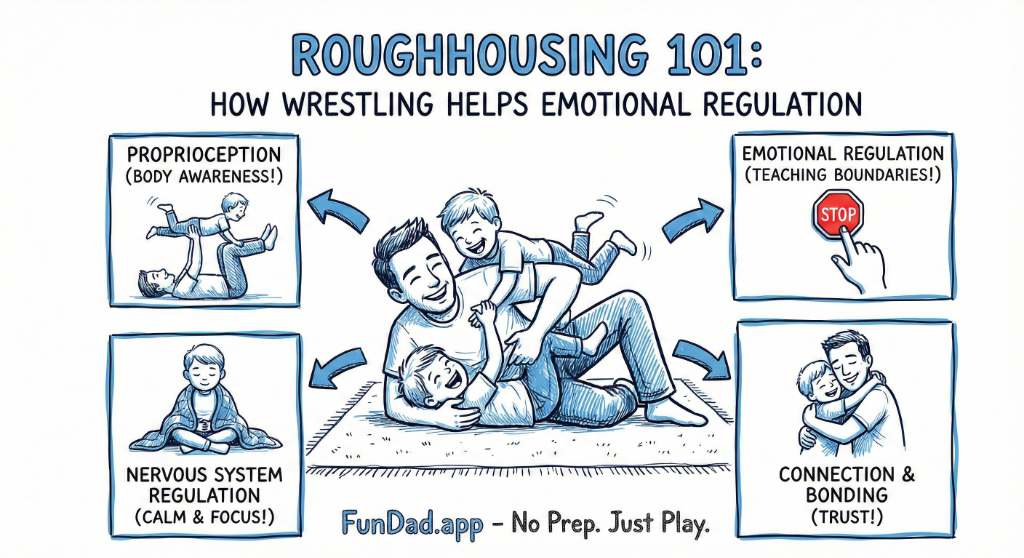
When you are wrestling with kids, their bodies are receiving massive amounts of “proprioceptive input.” This is the brain’s ability to sense where the body is in space, how muscles are stretching, and how joints are compressing.
Think of it like a human weighted blanket. For kids displaying sensory seeking behaviors—the ones bouncing off the walls and crashing into things—this intense physical pressure is actually calming. It helps in nervous system regulation for kids, taking their “lizard brain” from high alert down to a manageable hum.
The Emotional Dojo: Teaching Boundaries
The biggest of the benefits of roughhousing isn’t physical strength; it’s emotional intelligence.
When you are on the floor, you are creating a safe environment to practice big feelings. They get excited, frustrated, perhaps a little scared, and triumphant—all within 10 minutes.
This is how we teach emotional regulation through play. They learn the difference between excitement and actual aggression. They learn that if they bite or hit too hard, the fun stops immediately.
By establishing play fighting rules, you are teaching boundaries through play. You are teaching them the crucial life skill of how to ramp their energy up to a 10 and bring it back down to a 2 on command. This practice is vital for helping kids manage aggression in the real world.
The Connection Factor: Dad Play vs. Mom Play
Research often highlights a general difference in dad play vs mom play. While generalizations, moms often lean toward verbal, instructional play, while dads lean toward physical, unpredictable play.
Kids need both.
The spontaneity of physical play—being tossed in the air, not knowing if you’re going to zig or zag—builds resilience. It teaches them to adapt to sudden changes safely.
Furthermore, the importance of physical touch cannot be overstated for father child physical bonding. For many dads, connection through wrestling is their primary love language. It’s a way to say “I am here, I am strong, you are safe with me, and we can be silly together.” It is, quite simply, active play for emotional health.
Rules of Engagement: Safe Roughhousing Tips
To maximize the benefits and minimize the tears, you need a few ground rules.
The “Stop” Button: The moment anyone says “stop,” “red light,” or seems genuinely upset, the action freezes immediately. This builds trust.
The Dad Handicap: You are 150+ pounds heavier. You must play at 10% strength. You are the immovable object they must overcome; let them win often to build confidence.
No Headshots: Establish clear “no-go zones” for hitting or kicking.
Clear the Area: Move the coffee table. Building resilience in children shouldn’t involve stitches from a sharp corner.
Get On The Floor
Don’t overthink it. You don’t need a degree in child psychology to help your kid develop. You just need to get on the carpet and let them tackle you.
If you need fresh ideas for safe, fun wrestling games for dads, or creative ways to burn energy without destroying the house, let us handle the planning.
Download FunDad on the App Store. Our Computer Vision AI scans your room and suggests instant activities based on what you already have lying around.